If you have ever stared at a Google Analytics dashboard wondering which numbers actually matter, you are not alone. SEO produces a flood of data: traffic, rankings, click-through rates, backlinks, bounce rates, Core Web Vitals scores. The problem is not a lack of metrics. It is knowing which ones tell you whether your SEO is actually working and which ones are just noise.
This guide breaks down the SEO metrics and KPIs that matter most for business owners, marketers, and website managers, what each one tells you, and how to use them to make better decisions instead of just filling out a monthly report.
Why Tracking the Right SEO Metrics Matters
SEO is a long game. Unlike paid media, where you can see results within days, organic search results often take weeks or months to show up. That makes it tempting to either give up too early or keep spending on tactics that are not moving the needle.
The right SEO KPIs give you an early warning system. They tell you whether your strategy is on track long before revenue numbers confirm it, and they help you diagnose problems before they become expensive. Tracking the wrong metrics, or tracking everything with no priority, does the opposite. It creates busywork and makes it hard to tell a client, a boss, or yourself whether the SEO investment is paying off.
Vanity Metrics vs. Metrics That Matter
Before we get into the list, it is worth separating vanity metrics from metrics tied to business outcomes.
- Vanity metrics look impressive but do not directly connect to revenue or growth. Example: total number of keywords ranking on page one, regardless of search volume or intent.
- Actionable metrics connect directly to business goals such as leads, sales, or qualified traffic. Example: organic conversion rate for your top revenue-driving landing pages.
Both have a place in reporting, but if you only have time to look at a handful of numbers each month, prioritize the ones below.
The Core SEO Metrics and KPIs to Track
1. Organic Traffic
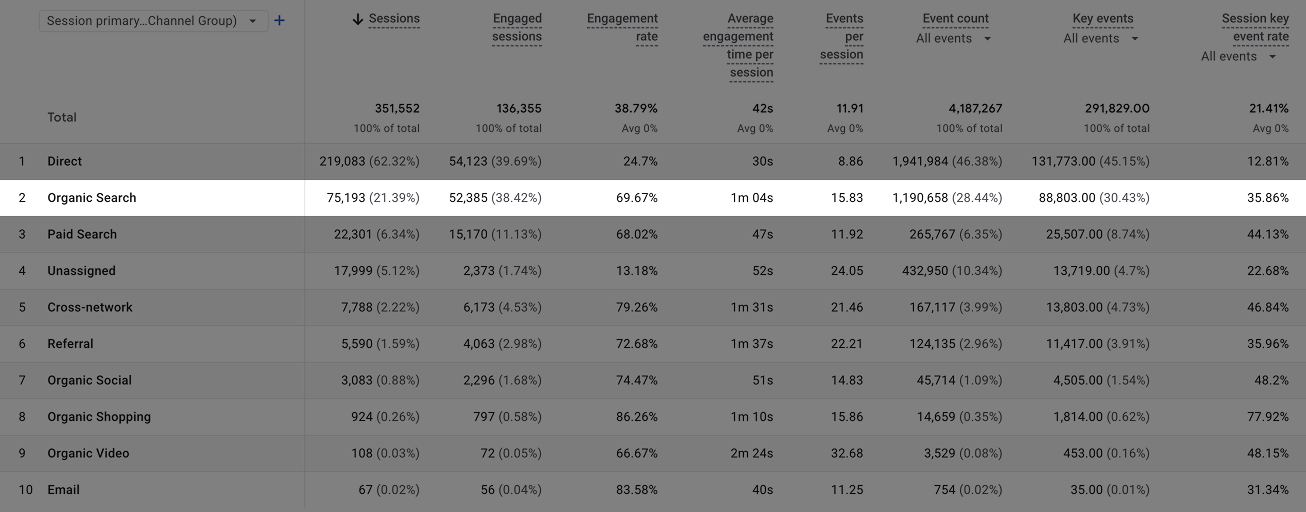
Organic traffic is the number of visitors who land on your site through unpaid search results. It is the most commonly cited SEO metric, and for good reason: it is a direct signal of visibility.
What to watch for:
- Overall trend over time (monthly or quarterly, not day to day, since search traffic naturally fluctuates)
- Traffic by landing page, to see which content is actually pulling weight
- Traffic by device, since mobile and desktop behavior can differ significantly
- New vs. returning organic visitors
A rising traffic number alone does not tell the full story. Traffic from irrelevant keywords or the wrong audience will not convert, which is why organic traffic should always be read alongside conversion data.
2. Keyword Rankings
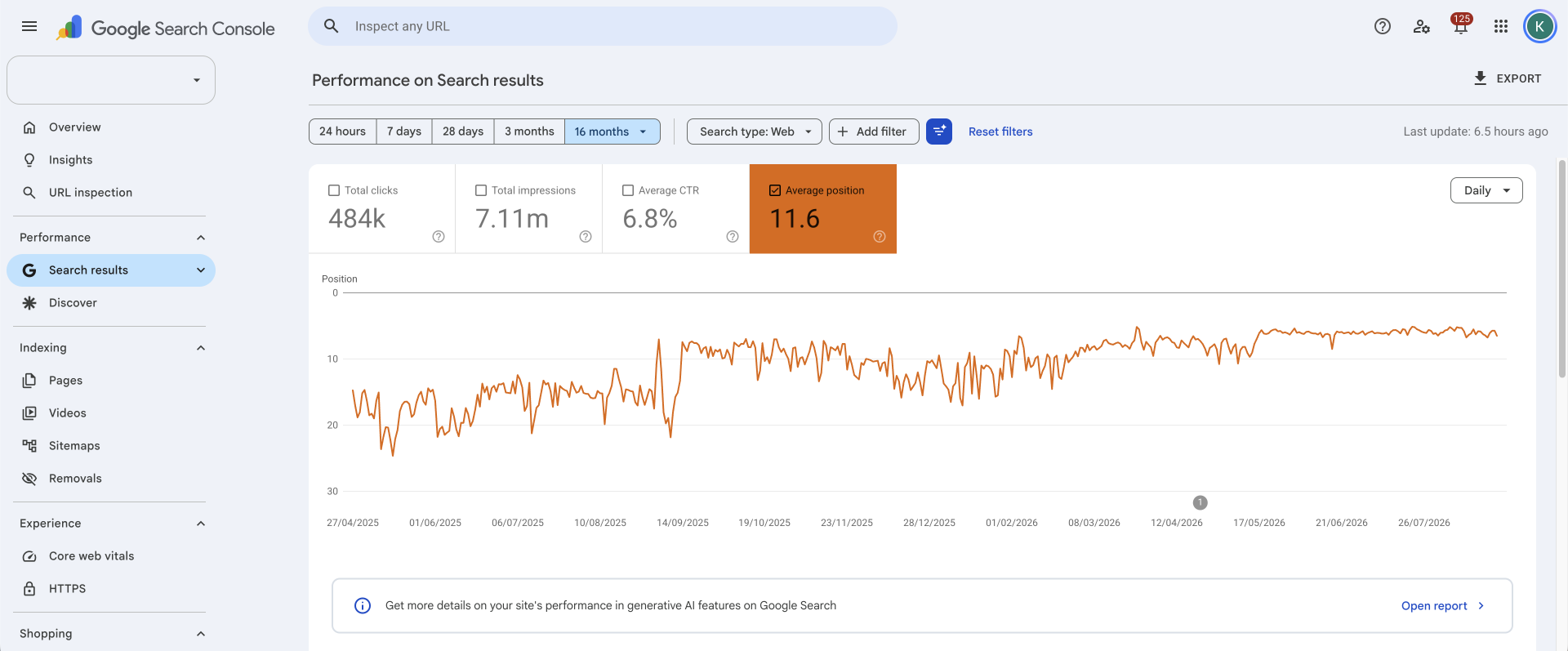
Keyword rankings show where your pages appear in search results for specific search terms. Ranking improvements are often the first visible sign that your SEO work is paying off.
What to track:
- Rankings for your priority keywords (the ones tied to buyer intent, not just high search volume)
- Ranking distribution, meaning how many keywords sit in positions 1 to 3, 4 to 10, and beyond page one
- Ranking volatility after algorithm updates
- Featured snippets and other SERP features you own or could target
A word of caution: rankings can shift daily due to personalization, location, and algorithm testing. Track trends over weeks, not single-day snapshots, and always tie rankings back to keywords that actually drive business value.
3. Organic Conversion Rate
This is arguably the most important metric on this list, because it connects SEO directly to revenue. Organic conversion rate measures the percentage of organic visitors who complete a desired action: a purchase, a form submission, a demo booking, a newsletter signup.
Why it matters: you can rank first for a keyword and drive thousands of visitors, but if none of them convert, the SEO effort is not producing business results. This is where SEO and conversion rate optimization (CRO) work hand in hand. Traffic gets people to the door. CRO makes sure the door is worth walking through.
Break this metric down by landing page and by traffic segment (branded vs. non-branded, mobile vs. desktop) to find where the biggest opportunities for improvement are.
4. Click-Through Rate (CTR)
CTR measures how often people click your listing after seeing it in search results, expressed as a percentage of impressions. It is a strong indicator of how compelling your title tags and meta descriptions are, and it directly affects how much of your ranking potential you are actually capturing.
Google Search Console is the primary source for this data. If a page ranks well but has a low CTR compared to similar pages, that is usually a sign the title tag or meta description needs a rewrite, not that the ranking itself is the problem.
5. Bounce Rate and Engagement Rate
Bounce rate (or its GA4 equivalent, engagement rate) shows how visitors behave once they land on your page. A high bounce rate on an organic landing page can indicate a mismatch between what searchers expected and what the page delivers, slow load times, poor mobile experience, or weak calls to action.
This metric should always be interpreted in context. A high bounce rate on a blog post someone used to quickly find an answer is not necessarily a bad sign. A high bounce rate on a product or service page is worth investigating.
6. Average Session Duration and Pages per Session
These engagement metrics show how much time and how many pages visitors explore during a session. Longer sessions and more pages per visit generally suggest your content is relevant and your internal linking is guiding people to related information effectively.
7. Backlinks and Referring Domains
Backlinks remain one of the strongest ranking signals in Google's algorithm. What matters more than raw backlink count is the quality and relevance of the domains linking to you.
Track:
- Total referring domains over time
- Quality of new links (relevance, authority, and whether they are follow or nofollow)
- Lost backlinks, so you can reach out and try to reclaim them
- Link velocity, since a sudden unnatural spike can trigger scrutiny from Google
8. Domain Authority or Domain Rating
Third-party metrics like Moz's Domain Authority or Ahrefs' Domain Rating are not used by Google directly, but they are useful proxies for your site's overall backlink strength compared to competitors. Use them for competitive benchmarking, not as a definitive measure of ranking power.
9. Core Web Vitals and Page Speed
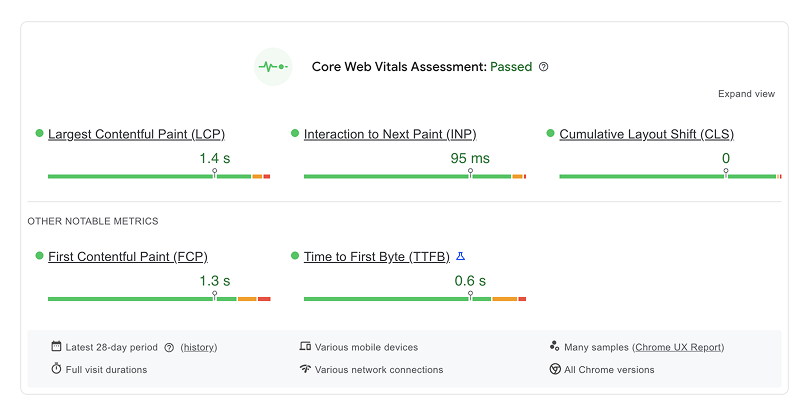
Google has made page experience, including load speed, interactivity, and visual stability, a confirmed ranking factor. Core Web Vitals measure:
- Largest Contentful Paint (LCP): how quickly the main content loads
- Interaction to Next Paint (INP): how responsive the page feels to user input
- Cumulative Layout Shift (CLS): how much the page layout shifts unexpectedly while loading
Poor Core Web Vitals scores can suppress rankings and hurt conversion rates at the same time, since slow, janky pages frustrate visitors before they even see your content.
10. Crawl Errors and Indexation Status
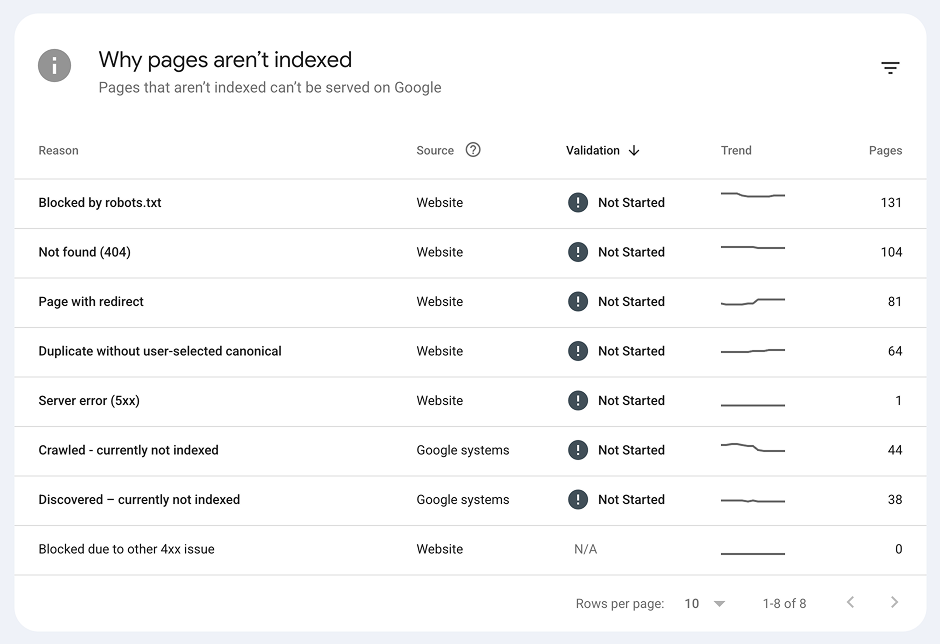
If Google cannot crawl or index your pages, none of the other metrics matter. Regularly check Google Search Console for:
- Crawl errors (404s, server errors, redirect issues)
- Pages excluded from the index and why
- Sitemap coverage
- Mobile usability issues
This is foundational SEO health monitoring. Problems here should be fixed before investing more in content or link building.
11. Organic Revenue and Return on Investment (ROI)
For businesses that sell products or services online, organic revenue ties everything together. This metric, usually tracked through e-commerce or goal-value tracking in analytics platforms, shows exactly how much revenue organic search is generating.
Pair this with the cost of your SEO investment (agency fees, content production, tools) to calculate ROI. This is the number that tends to matter most in conversations with leadership or stakeholders, because it translates SEO activity into business impact.
How Often Should You Track These Metrics?
- Weekly: rankings for priority keywords, crawl errors, Core Web Vitals alerts
- Monthly: organic traffic trends, conversion rates, CTR, engagement metrics, backlink growth
- Quarterly: organic revenue and ROI, competitive benchmarking, content and keyword strategy review
Checking metrics too frequently can lead to overreacting to normal fluctuations. Checking too rarely means problems go unnoticed for months. A structured cadence keeps you responsive without causing noise-driven decisions.
Common Mistakes When Tracking SEO KPIs
- Focusing only on rankings. Rankings are a means to an end, not the end itself. A page one ranking on a keyword nobody searches for, or that does not match buyer intent, will not grow your business.
- Ignoring conversion data. Traffic without conversion tracking tells you very little about whether SEO is working for your bottom line.
- Comparing month to month without seasonality context. Many industries have natural seasonal traffic patterns. Compare year over year where possible.
- Not segmenting data. Blended metrics across your whole site can hide big wins or big problems on specific pages.
- Setting and forgetting goals. SEO KPIs should be revisited as business priorities shift, not locked in once and ignored.
Frequently Asked Questions
What is the most important SEO metric to track? There is no single answer that fits every business, but organic conversion rate and organic revenue are generally the most important because they connect SEO activity directly to business outcomes. Traffic and rankings matter, but mainly as leading indicators that support those bottom-line numbers.
How long does it take to see results in SEO metrics? Most businesses start to see meaningful movement in rankings and traffic within three to six months, with more substantial results building over six to twelve months. This varies based on competition, site history, and how aggressively the strategy is executed.
What tools are used to track SEO KPIs? Google Search Console and Google Analytics (GA4) are the foundation for most businesses, since they are free and directly tied to Google's own data. Tools like Ahrefs, SEMrush, and Moz add competitive insights, backlink tracking, and keyword research capabilities.
Is keyword ranking still a reliable SEO metric? Yes, but it should not be viewed in isolation. Rankings fluctuate for reasons outside your control, including personalization and algorithm testing. Use ranking trends alongside traffic and conversion data for a full picture.
Bringing It All Together
SEO success is not about tracking every metric available. It is about identifying the handful of KPIs that connect to your actual business goals, monitoring them consistently, and using what you learn to make better decisions about content, technical fixes, and where to invest next.
If your team is tracking traffic and rankings but still cannot answer whether SEO is generating real business results, that is usually a sign the strategy needs to connect more closely with conversion rate optimization and data analytics, not just more content or more links.
Ready to Find Out What Your SEO Metrics Are Really Telling You?
Book a free consultation with our team and we will walk through your current SEO and conversion data together, no obligation.
Book a Free Website Consultation
Discover quick wins for your digital strategy. 100% guaranteed.