Introduction
If your website is not showing up on search engines, you are invisible to a large portion of your potential customers.
Search Engine Optimization (SEO) is not just a marketing tactic. It is a foundational growth channel. Done right, it brings in consistent, high-intent traffic without relying entirely on paid ads.
This guide breaks down the core SEO fundamentals every marketer should understand, focusing on three pillars: keywords, on-page optimization, and link building.
Why SEO Still Matters
Many businesses think they have a traffic problem. In reality, they have a visibility and intent problem.
If your website is not showing up when people are actively searching, you are missing out on some of the highest-quality traffic available. This is exactly why SEO continues to be one of the most valuable long-term marketing investments. If you want a deeper breakdown, we cover this in more detail in our guide on the top reasons why SEO should be part of your core website strategy.
SEO helps you:
- Attract users who are actively searching for your product or service
These are high-intent users, which means they are far more likely to convert compared to passive audiences. - Reduce dependency on paid acquisition
Relying only on paid media can get expensive quickly. SEO creates a more sustainable acquisition channel that continues to perform over time. - Build long-term, compounding traffic
Unlike paid campaigns that stop when the budget runs out, strong SEO builds momentum and continues to generate traffic month after month. - Improve overall website performance and user experience
SEO is no longer just about rankings. It pushes you to create faster, clearer, and more user-friendly experiences, which directly impacts conversions.
If your goal is sustainable growth, SEO is not optional. It is a core part of building a scalable and resilient marketing strategy.
1. Keywords: The Foundation of SEO
What Are Keywords?
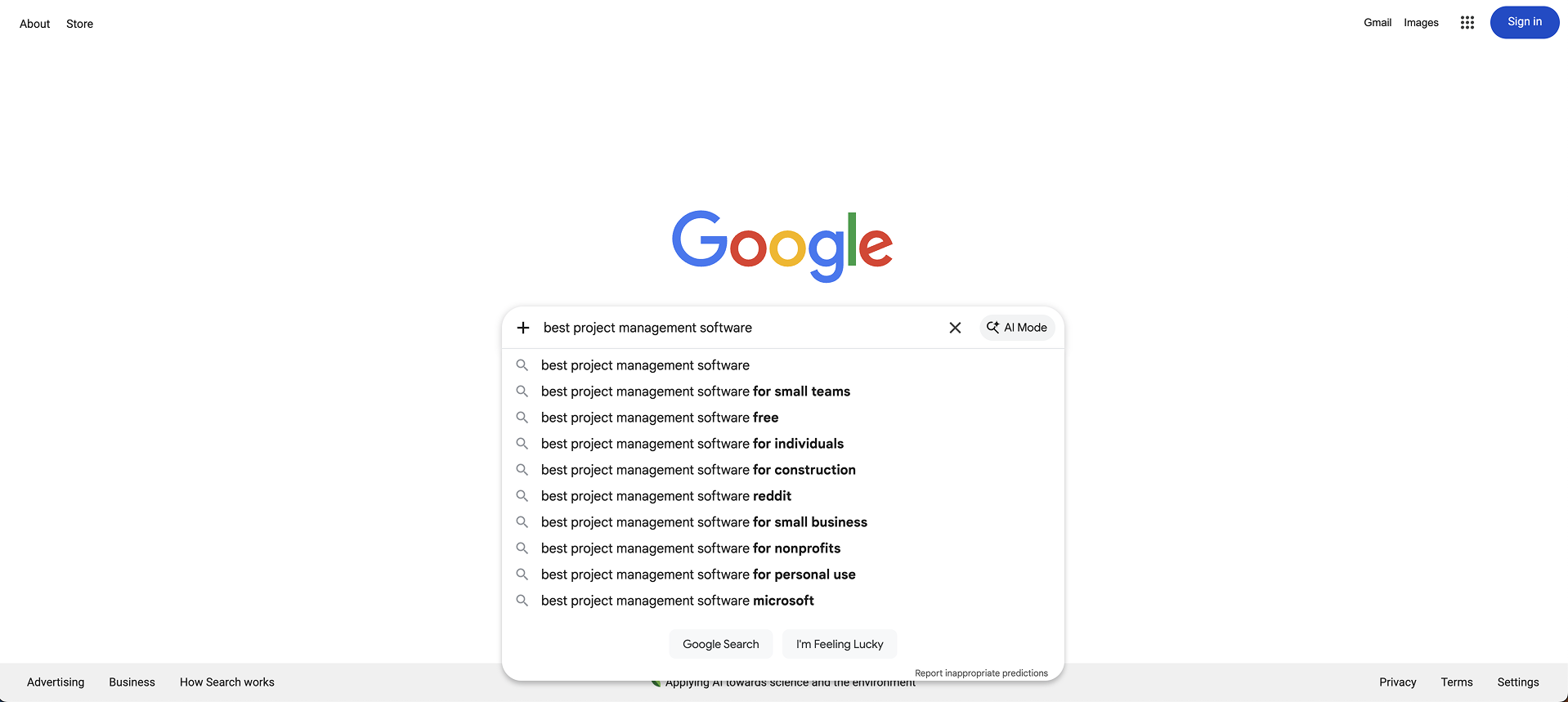
Keywords are the search terms people type into Google. They represent intent, what a user is trying to find, solve, or buy.
For example:
- "best project management software for remote teams"
- "affordable running shoes online"
- "how to reduce cart abandonment ecommerce"
- "B2B lead generation strategies"
Each of these searches signals a different need, and a different stage in the decision-making process.
If you are not targeting the right keywords, you are not reaching the right audience. More importantly, you risk attracting traffic that does not convert.
This is why keyword strategy is not just about volume. It is about alignment. The closer your keywords match what your ideal customers are actually searching for, the more relevant your traffic becomes.
Done right, keywords help you:
- Show up at the exact moment someone is looking for a solution
- Attract users with clear intent, not just passive browsers
- Align your content with real customer problems and needs
Without a clear keyword strategy, even well-designed websites and strong offers can struggle to gain traction.
Types of Keywords You Should Target
Not all keywords are equal. They reflect different stages of the buyer journey, which means they play different roles in your SEO and conversion strategy.
Understanding this is critical if you want to attract not just traffic, but the right traffic.
1. Informational keywords
Users are looking for answers, insights, or education.
Example searches:
- "how to choose running shoes"
- "what size air fryer should I buy"
- "best materials for winter jackets"
- "are standing desks worth it"
These keywords are top-of-funnel. They are valuable for building awareness, trust, and authority. While they may not convert immediately, they bring users into your ecosystem and create opportunities for retargeting and nurturing.
2. Commercial keywords
Users are actively researching solutions and comparing options.
Example searches:
- "best running shoes for flat feet"
- "top air fryers under $200"
- "best winter jackets for extreme cold"
- "standing desk vs sitting desk"
These users are closer to making a decision. They are evaluating providers, features, pricing, and fit. Ranking for these keywords positions your brand as part of the consideration set, which is a critical step before conversion.
3. Transactional keywords
Users are ready to take action.
Example searches:
- "buy running shoes online"
- "pricing for project management software"
- "hire PPC agency"
These are high-intent keywords with the strongest conversion potential. Users already know what they want and are looking for the best place to take action.
A strong SEO strategy includes all three types of keywords because they support the full customer journey, from discovery to decision.
However, many businesses over-focus on informational content and underinvest in high-intent, transactional keywords. This often leads to traffic growth without meaningful business impact.
The real opportunity lies in balancing visibility with intent, so you are not just attracting visitors, but attracting users who are ready to convert.
How to Choose the Right Keywords
Choosing the right keywords is not about chasing the highest search volume. It is about targeting the searches that are most likely to drive meaningful results for your business.
Focus on:
- Search intent: What is the user actually trying to do?
Are they learning, comparing, or ready to buy? If your content does not match the intent behind the search, it will struggle to rank and even if it does, it will not convert. - Relevance: Does this keyword match your offer?
Ranking for a keyword only matters if it attracts the right audience. If the search does not align with your product, service, or value proposition, the traffic will not translate into business outcomes. - Difficulty: Can you realistically rank for it?
Highly competitive keywords are often dominated by established brands. A smarter approach is to identify opportunities where you can compete and win, especially in more specific or niche searches. - Volume: Is there enough traffic to justify the effort?
Low-volume keywords can still be valuable if they are highly targeted, but you need a balance. The goal is to prioritize keywords that bring both relevance and enough scale to impact growth.
Why Long-Tail Keywords Matter
Long-tail keywords are more specific, lower competition, and usually tied to clearer intent.
Examples:
- "best running shoes for knee pain beginners"
- "affordable CRM for small SaaS startups"
- "email marketing tools for ecommerce beginners"
- "how to reduce cart abandonment Shopify store"
These types of searches may have lower volume individually, but they often:
- Attract more qualified users
- Are easier to rank for
- Lead to higher conversion rates
In many cases, a collection of well-targeted long-tail keywords will outperform a single high-volume keyword, both in traffic quality and revenue impact.
2. On-Page Optimization: Making Your Pages Rank
On-page SEO is about optimizing individual pages so search engines can clearly understand your content and users can easily engage with it.
It is where visibility and performance meet. You are not just trying to rank. You are trying to turn that visibility into clicks, engagement, and conversions.
Even the best keyword strategy will fall short if your pages are not properly optimized.
Key Elements of On-Page SEO
Title Tags
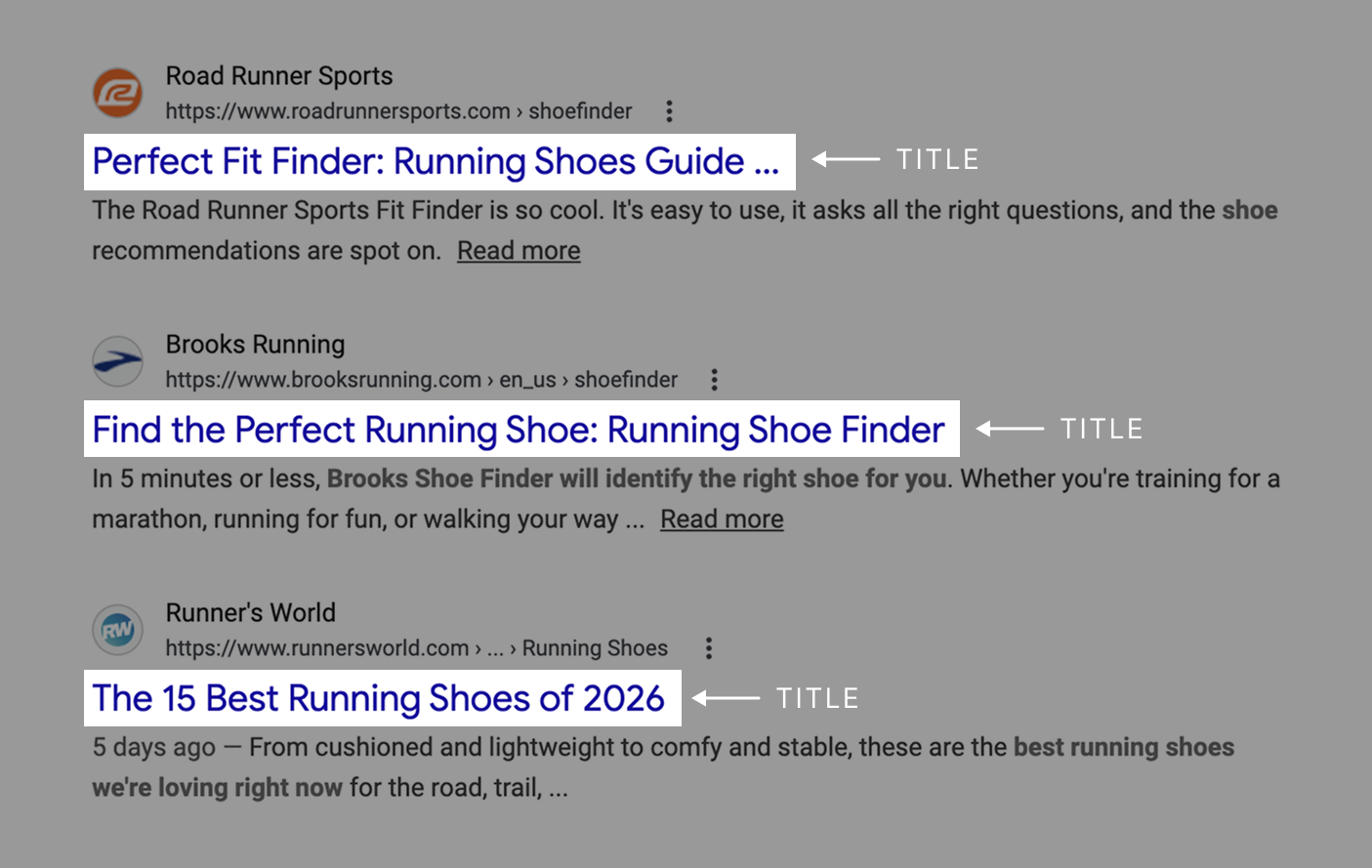
This is what shows up in search results and is often the first impression users have of your page.
Best practices:
- Include your main keyword
- Keep it under 60 characters
- Make it compelling, not just descriptive
A strong title tag does two things. It helps search engines understand your page, and it gives users a reason to click over competing results.
Meta Descriptions
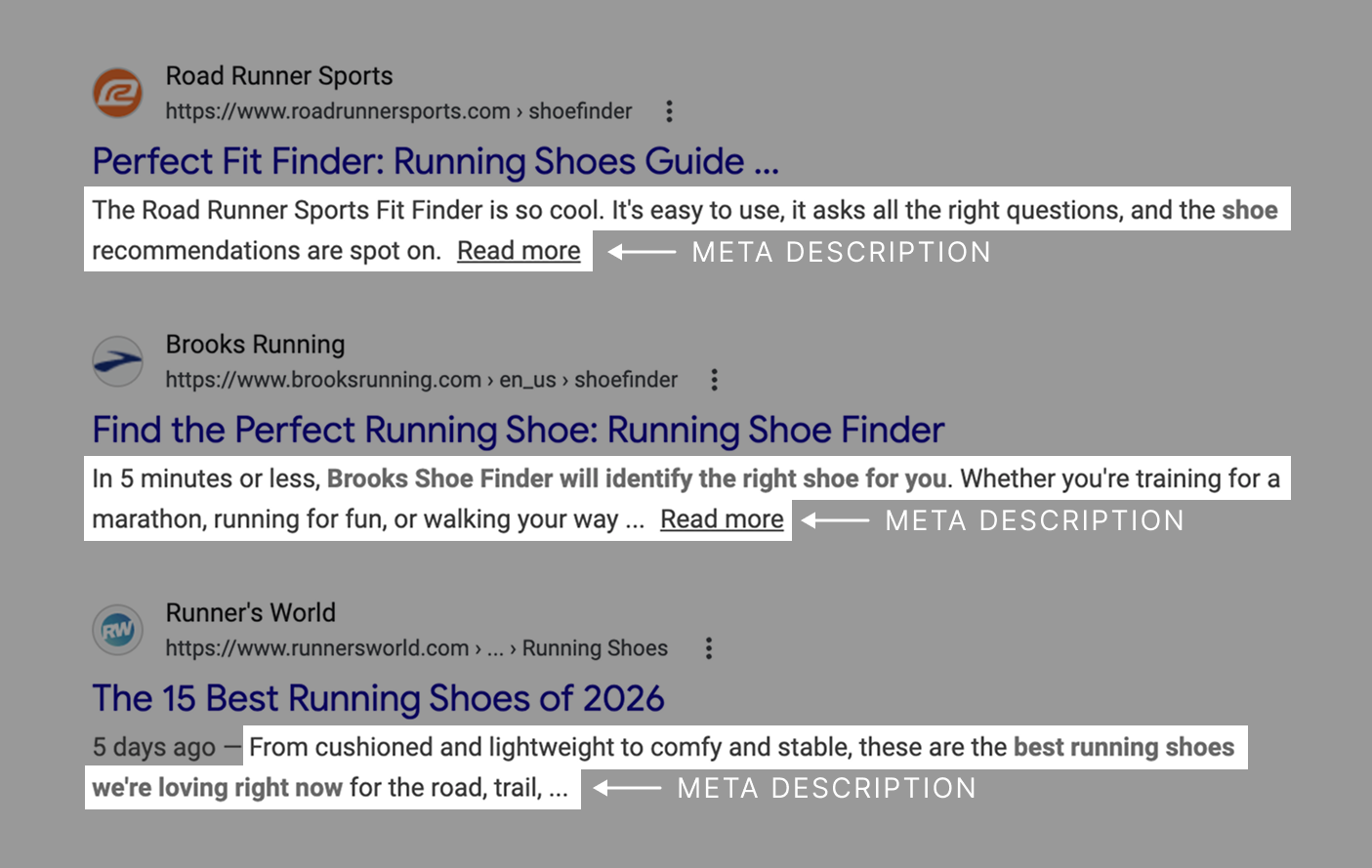
While not a direct ranking factor, meta descriptions have a strong impact on click-through rate.
Best practices:
- Summarize the value clearly
- Include keywords naturally
- Keep it under 155 characters
Think of this as your pitch in search results. If your meta description does not clearly communicate why your page is worth visiting, users will scroll past it.
Headings (H1, H2, H3)
Structure matters for both users and search engines.
Best practices:
- Use one clear H1 per page to define the main topic
- Use H2s and H3s to break content into logical sections
- Include keywords where relevant, without forcing them
Well-structured content is easier to scan, easier to understand, and more likely to keep users engaged. This directly impacts both rankings and on-page behavior.
Content Quality
Content is still one of the most important ranking factors, but quality matters more than quantity.
Google prioritizes content that:
- Answers the user’s question clearly and directly
- Provides real value, not generic or recycled information
- Is easy to read, well structured, and focused
Strong content also aligns closely with search intent. A mismatch between what users expect and what your page delivers is one of the fastest ways to lose rankings and conversions.
Avoid writing for search engines. Write for users first, then optimize.
Internal Linking
Internal links connect your pages and create a clear structure across your website.
They help:
- Distribute authority across your site
- Guide users to relevant content and next steps
- Help search engines crawl and understand your site
A strong internal linking strategy also supports conversion by moving users through your funnel.
For example:
- Link blog posts to relevant product or service pages
- Link related articles to keep users engaged longer
- Guide users toward high-intent pages when appropriate
Page Experience
SEO is no longer just about content. How your page performs is just as important as what it says.
Your page needs to:
- Load quickly
- Be mobile-friendly
- Be easy to navigate
If users land on your page and struggle to interact with it, they will leave. This increases bounce rates and reduces conversions, which can negatively impact rankings over time.
This is where SEO overlaps heavily with UX and CRO. The best-performing pages are not just optimized for search engines, they are designed for real users.
3. Link Building: Building Authority
Backlinks are still one of the strongest ranking factors in SEO. A backlink is when another website links to yours. Think of it as a vote of confidence: when a reputable site links to your content, search engines interpret it as a signal that your page is trustworthy and valuable.
Strong backlinks can significantly improve your rankings, drive referral traffic, and increase your overall online authority. Without them, even well-optimized pages can struggle to compete in search results.
Why Backlinks Matter
Search engines use backlinks to evaluate:
- Credibility - Are others vouching for your content?
- Authority - Do authoritative websites in your niche reference your pages?
- Trustworthiness - Are you a reliable source of information?
High-quality backlinks help search engines understand that your site is relevant and valuable, which increases the likelihood of ranking higher. Essentially, backlinks are one of the strongest signals that your content deserves visibility.
What Makes a Good Backlink?
Not all links are created equal. Quality always outweighs quantity. Focus on links that are:
- Relevant: The site linking to you should be in the same industry or niche. For example, an ecommerce site selling fitness gear benefits more from a link on a health blog than a random unrelated website.
- Authoritative: The site should be trusted and have a strong online presence. Links from respected sources carry far more weight.
- Meaningfully placed: Context matters. Links embedded within high-quality content are more valuable than links hidden in footers or sidebars.
One strong backlink from a credible, relevant site is often more powerful than dozens of low-quality or spammy links.
How to Build Backlinks
Building backlinks is about creating value and forming genuine connections. Some practical strategies include:
- Create high-value content people want to reference
Educational guides, data-driven studies, infographics, and in-depth resources naturally attract links from other sites. - Guest post on relevant industry sites
Providing insights or thought leadership on trusted platforms helps establish authority while generating backlinks. - Build partnerships and collaborations
Co-marketing, interviews, or collaborations with other businesses can generate natural links. - Share original data or insights
Unique research, statistics, or case studies are highly linkable because other websites reference them as sources. - Get listed in directories or resource pages
Being included in reputable directories or curated resource lists can provide strong, relevant backlinks.
Avoid shortcuts such as buying links, participating in link farms, or using automated link schemes. These tactics often do more harm than good, risking penalties and harming your credibility.
How SEO and CRO Work Together
SEO brings traffic to your website. CRO, or Conversion Rate Optimization, ensures that traffic turns into meaningful business results.
If your site ranks well but visitors leave without taking action, you are leaving money on the table. Many businesses focus on either SEO or CRO in isolation, but the most effective strategy combines both.
- SEO for acquisition - Attracts the right users at the right time.
- CRO for performance - Converts that traffic into leads, sales, or other desired actions.
This combination ensures that every visitor is both discoverable and actionable. Key elements include:
- Optimized landing pages - Pages designed to match search intent and guide users toward action.
- Clear messaging - Communicating value quickly and persuasively.
- Strong calls to action - Clear next steps that encourage engagement or purchase.
- Continuous testing and improvement - Using data and experiments to refine both traffic quality and conversion rates.
When SEO and CRO are aligned, you create a self-reinforcing cycle: better traffic drives better results, and better results justify ongoing investment in SEO.
Common SEO Mistakes to Avoid
Even experienced marketers can fall into common SEO traps. Avoid these mistakes to maximize your results:
- Targeting keywords without understanding intent. Not all traffic is valuable; focus on the searches that align with user goals and business outcomes.
- Writing content for search engines instead of users. Search engines reward content that serves real people, not content stuffed with keywords.
- Ignoring technical and UX issues. Slow-loading pages, broken links, and poor navigation hurt both rankings and conversions.
- Building low-quality backlinks. Quantity does not replace quality. Spammy or irrelevant links can harm your rankings.
- Not tracking performance or results. SEO is an ongoing process. Without tracking metrics like organic traffic, rankings, and conversions, you cannot improve effectively.
SEO is not a one-time task. It is a continuous process of creating value, monitoring performance, and optimizing for both search engines and users.
Final Thoughts
SEO is not about gaming the system. It is about aligning your website with what users are actually searching for. When done correctly, it builds credibility, drives relevant traffic, and supports long-term business growth.
If you get the fundamentals right:
- Target the right keywords. Align your content with the searches your ideal customers are performing.
- Optimize your pages properly. Make your site easy to navigate, fast-loading, and structured for both users and search engines.
- Build real authority. Earn backlinks and recognition from trusted sources in your industry.
When these pillars are in place, SEO becomes more than a marketing tactic. It becomes a reliable, long-term channel that drives consistent, high-quality traffic and supports revenue growth.
Ready to Turn Traffic Into Revenue?
Most businesses do not need more traffic. They need better performance from the traffic they already have.
If you want to combine SEO with a strong conversion strategy, we can help.
👉 Book a free consultation to identify where your biggest growth opportunities are.
Book a Free Website Consultation
Discover quick wins for your digital strategy. 100% guaranteed.