Branding is not just how your business looks; it is how your business shows up.
Your values influence how you make decisions, how you treat customers, how you design experiences, and how you grow. When your branding clearly reflects those values, people do not just understand your business faster; they trust it more, engage longer, and convert with greater confidence.
Yet many brands struggle with a disconnect:
- They say one thing but look like another
- Their messaging feels generic or overly polished
- Their website does not reflect how they actually operate
In this article, we will break down how to intentionally align your branding with your values, what that looks like in practice, and how it directly impacts conversion rates, loyalty, and long-term growth.
What Does It Mean to Align Branding With Values?
At its core, aligning branding with values means:
Your visual identity, messaging, tone, and user experience consistently reflect what your business actually stands for.
This includes:
- Your mission and beliefs
- How you treat customers and users
- What you prioritize (speed, quality, transparency, innovation, inclusion, sustainability, etc.)
- The promises you are willing and able to keep
When branding and values are aligned, your brand feels authentic, consistent, trustworthy, and human. Users can sense this alignment, which makes interactions feel natural and credible. When branding and values are not aligned, however, users often experience friction or discomfort, even if they cannot clearly articulate why.
Why Values-Based Branding Matters for Conversions
From a CRO and UX perspective, values-driven branding is not just nice to have. It directly impacts performance.
1. Trust Is a Conversion Prerequisite
Users do not convert if they do not trust you. Clear values help reduce perceived risk, set expectations for what working with you will be like, and signal credibility and intention. When your values are visible and believable, users are far more likely to take action, whether that means booking a consultation, submitting a lead form, or making a purchase without hesitation.
2. Alignment Filters the Right Customers
Values-based branding also acts as a filter to attract the right customers and repel those who are a poor fit. Not everyone is your ideal customer, and that is a good thing. When users resonate with your approach, lead quality improves, expectations are clearer, and your overall close rates, retention, and customer satisfaction benefit.
3. Consistency Reduces Cognitive Load
Another major benefit of values-driven branding is consistency, which reduces cognitive load for users. When values guide branding decisions, everything from copy to visual design, UX patterns, and CTAs feels cohesive. Users can quickly understand who you are, what you offer, and why they should choose you. Clarity is one of the strongest drivers of conversion, and values-aligned branding delivers it naturally.
Step 1: Clearly Define Your Brand Values (Before You Design Anything)
Many brands skip this step or keep their values vague. Words like “integrity,” “innovation,” and “customer-first” are not enough. Strong brand values are specific, actionable, and observable.
Ask the Right Questions
Instead of asking “What values do we want?”, ask:
- What behaviors do we reward internally?
- What trade-offs are we willing to make?
- What would we never compromise on, even for growth?
- What do our best customers appreciate most about working with us?
- Why do people choose us over competitors?
Example
Instead of:
“Transparency”
Clarify:
“We explain our process, pricing, and recommendations clearly, even when it means saying no or challenging assumptions.”
This level of clarity allows values to show up authentically in branding.
Step 2: Translate Values Into Brand Personality and Tone
Values should not live only on an “About Us” page. They should shape how you sound everywhere.
Map Values to Voice
Ask:
- If our brand were a person, how would they speak?
- Formal or conversational?
- Confident or exploratory?
- Bold or reassuring?
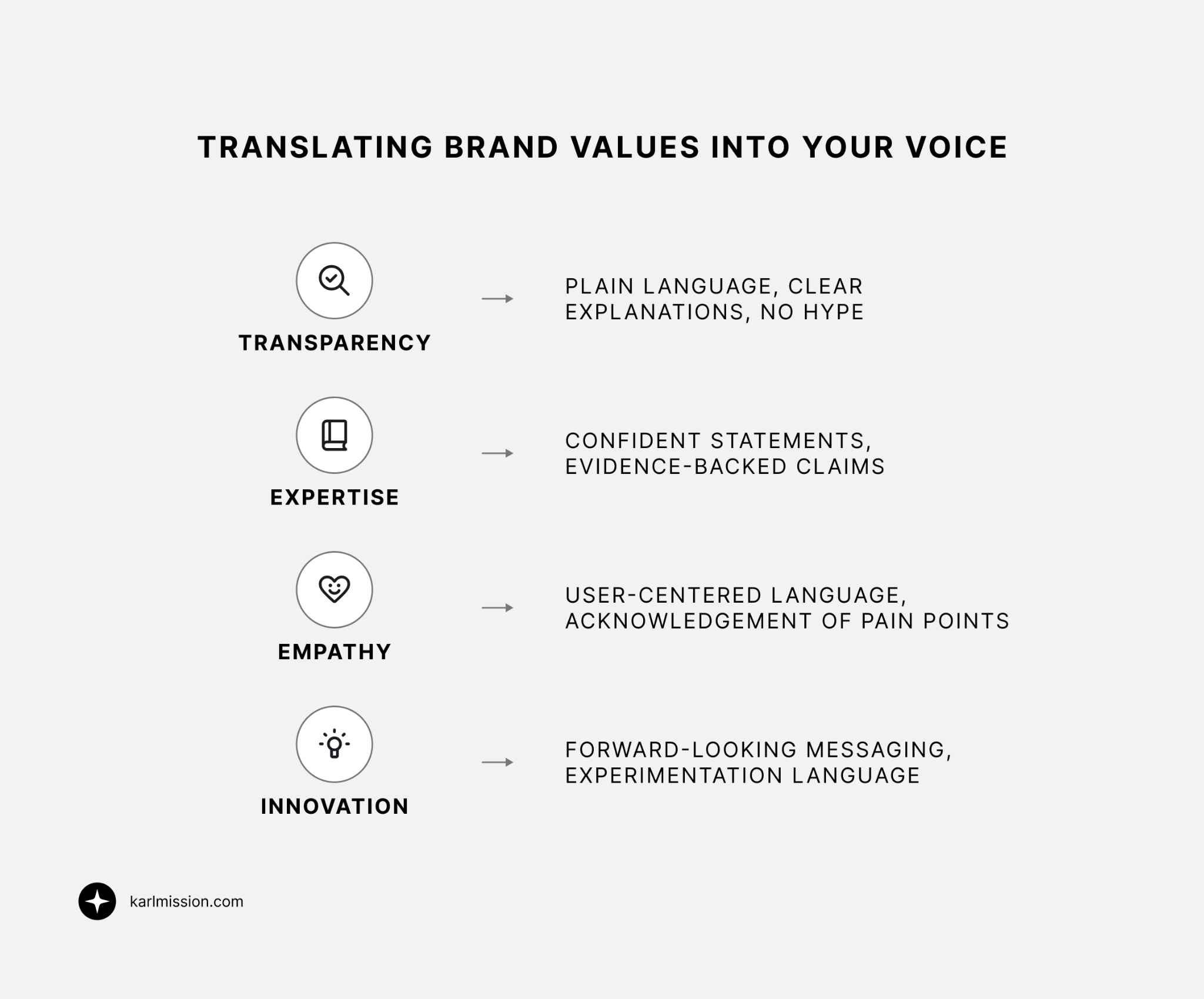
For instance, transparency translates into plain language and clear explanations without hype. Expertise becomes confident, evidence-backed statements. Empathy is reflected in user-centered language that acknowledges pain points, while innovation appears in forward-looking messaging and experimentation language.
Tone has a tangible impact on conversion. Users engage more, scroll further, and complete forms when they feel spoken to, rather than sold to. Your values provide the blueprint for a tone that resonates with the right audience.
Step 3: Align Visual Identity With What You Stand For
Visual branding is often where misalignment shows up first. A brand that claims to be human but looks corporate, innovative but outdated, or premium but templated creates immediate friction. To align your visuals with your values, consider these key elements below.
Key Visual Elements to Audit
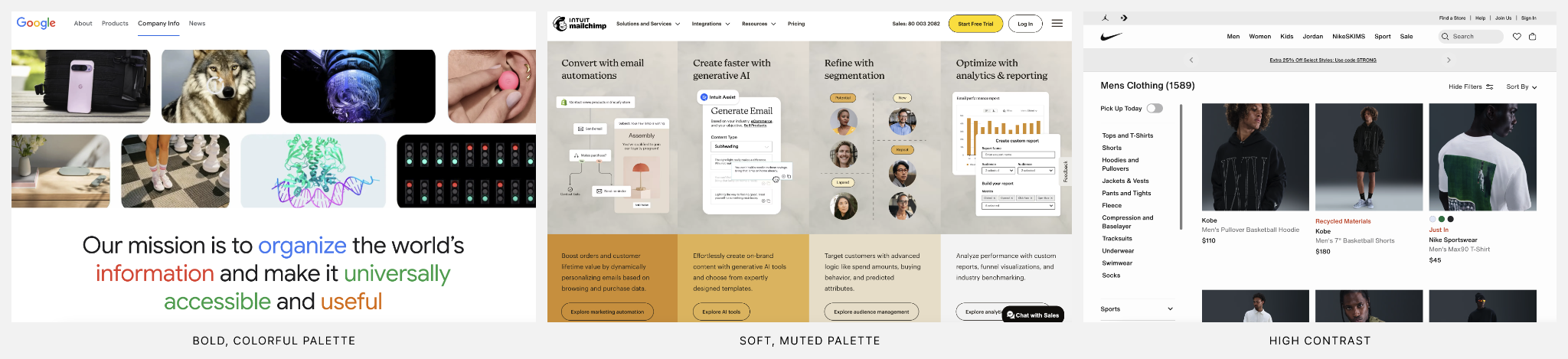
Color Palette
- Bold colors signal confidence, energy, disruption
- Muted tones signal calm, trust, sophistication
- High contrast signals clarity and decisiveness
Ask: Do our colors reflect how we want users to feel?
Typography
- Sans-serif signals modern, accessible
- Serif signals established, authoritative
- Rounded fonts signal friendly, inclusive
Typography communicates values before users read a single word.
Imagery
- Stock-heavy images feel generic and impersonal
- Real people create authenticity and trust
- Abstract visuals signal innovation and conceptual thinking
Your imagery should reflect real moments, not marketing clichés.
Step 4: Embed Values Into the User Experience (UX)
Branding does not stop at visuals and copy. UX is branding in action. Your values should inform how users experience your website or product. If your value is simplicity, ensure the site is easy to navigate. If respect is a core value, keep forms short and intentional. If inclusivity matters, accessibility should be considered at every stage. If performance is important, pages should load quickly and function flawlessly. When UX contradicts stated values, users notice, and conversions suffer.
UX Questions to Ask
- Are we asking users for information we do not truly need?
- Is our navigation intuitive for first-time visitors?
- Do our CTAs reflect user intent or business pressure?
- Are we designing for real behavior or assumptions?
When UX contradicts stated values, users notice and conversions suffer.
Step 5: Make Values Visible at Key Conversion Points
Values matter most when users are deciding whether to act.
High-Impact Areas to Reinforce Values
- Homepage hero section
- Service pages
- Pricing pages
- Case studies and testimonials
- Consultation or demo pages
Practical Examples
If you value collaboration:
- Show your process visually
- Highlight partnership language
- Share behind-the-scenes insights
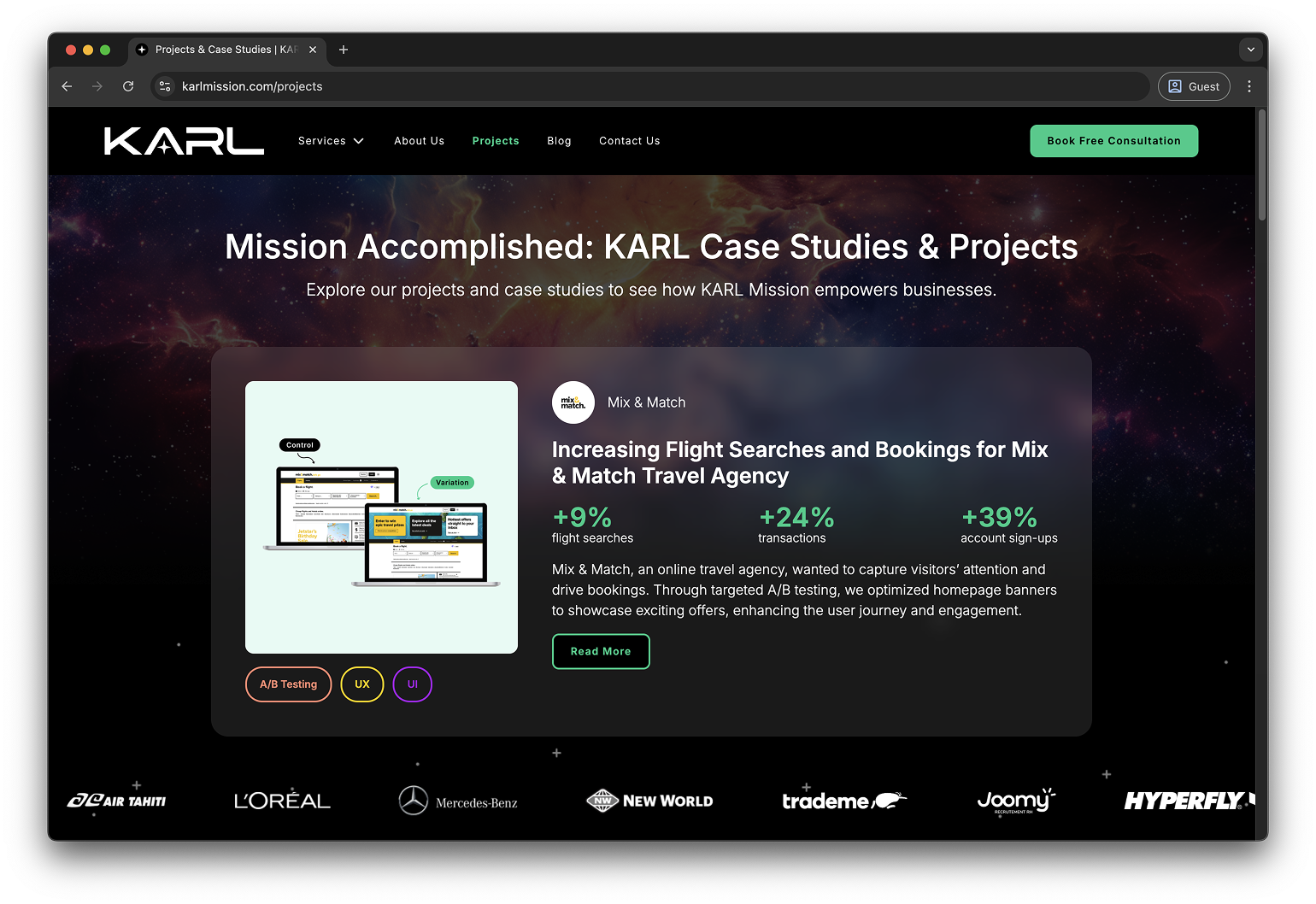
If you value results:
- Lead with outcomes, not features
- Use data, benchmarks, and case studies
- Be specific about impact
If you value honesty:
- Address limitations openly
- Set clear expectations
- Avoid exaggerated claims
This reduces friction and builds confidence at the exact moment users are deciding to convert.
Step 6: Test Whether Your Branding Actually Reflects Your Values
Even the most carefully designed branding should be validated. CRO and user research are critical here. Conduct user testing to ask how your brand feels and why. Use on-site surveys to understand what makes users trust you. Analyze session recordings to identify hesitation points, and run A/B tests to compare messaging that emphasizes different values. Often, small changes in language, visuals, or layout can significantly improve perceived authenticity, trust, and ultimately, conversion.
Common Mistakes When Aligning Branding With Values
1. Declaring Values Without Proof
One of the most frequent mistakes brands make is declaring values without proof. Simply stating that you are customer-first, innovative, or transparent is not enough if your website, UX, or customer interactions do not support those claims. Users pay attention to how your brand actually behaves. For instance, if your UX requires unnecessary steps to complete a form, or if pricing information is unclear, users will notice the disconnect and trust will erode, regardless of how strong your messaging is. Your values need to be actionable and visible at every touchpoint, or they risk being perceived as empty promises.
2. Copying Competitors
Another common error is copying competitors. Many brands look at industry leaders and attempt to adopt similar values, messaging, or visuals to “fit in.” While this may seem safe, it often backfires because your values should serve as a differentiator, not a template. Users are looking for authenticity and uniqueness. By blindly copying competitors, you dilute your identity and fail to create meaningful connections with your ideal audience. The stronger and more specific your values are, the more memorable and compelling your brand will be.
3. Over-Polishing
Some brands focus so heavily on perfect design, copy, or visuals that they lose the sense of human authenticity. Glossy language, overly staged imagery, or rigid design can create distance between you and your audience. Users are drawn to honesty, clarity, and realness. Often, straightforward messaging that reflects your actual practices converts better than marketing that tries too hard to impress.
4. Treating Branding as a One-Time Exercise
Values are not static; they evolve as your business grows, your team changes, and your customers’ needs shift. Reviewing and refining branding on a regular basis ensures that your visuals, messaging, UX, and overall brand experience remain aligned with your current values. Failing to do so can result in outdated messaging or misaligned experiences, which can slowly erode trust and hinder conversions.
By avoiding these common mistakes and taking a proactive, authentic approach to values-based branding, your brand becomes more credible, trustworthy, and ultimately more effective in converting and retaining customers.
How Values-Aligned Branding Supports Long-Term Growth
When branding and values are aligned, marketing becomes easier, decision-making becomes clearer, teams maintain consistency, and customers become advocates. From a CRO perspective, alignment also drives higher-quality leads, better conversion rates, stronger retention, and more sustainable growth. Branding is not just about being seen; it is about being believed.
Final Thoughts
Matching your branding with your values is not about adding more messaging; it is about removing disconnects. When values guide your visual design, messaging, UX decisions, and conversion strategy, your brand becomes clearer, more credible, and more effective. If you are unsure whether your current branding truly reflects what your business stands for or whether it is helping or hurting conversions, expert CRO and UX insight can help.
Ready to Align Your Brand and Improve Conversions?
If you want an honest, practical review of how well your branding reflects your values and how it impacts conversion, we can help.
Book a free consultation and we will review your branding, UX, and conversion paths to identify where alignment can drive better results.
Book a Free Website Consultation
Discover quick wins for your digital strategy. 100% guaranteed.